The room I was most looking forward to was visiting during our Danish adventure to Jens Quistgaard’s home was his workshop. I had seen photos of the space, and it was featured in the “Saucepan” documentary. Although he wasn’t working at this house during his most productive period at the beginning of the Dansk line, it’s where he settled down with his tools to design and create. It was thus a very special place for him, and it was just how he wanted it.
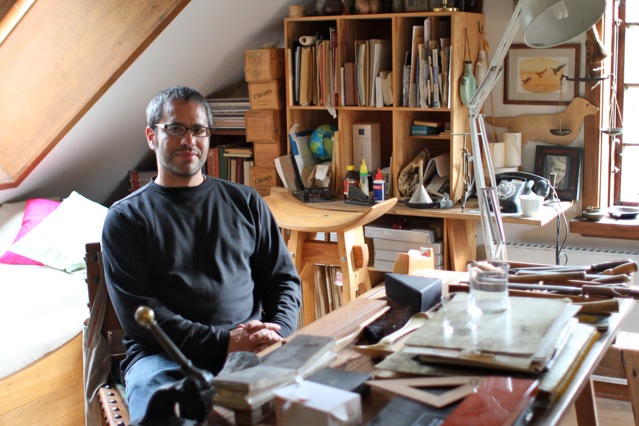
Here I am in sitting at his desk. What a comfortable spot. The mess was perfect with trinkets, prototypes, tools, books, and collectibles everywhere. Each nook and cranny was filled with something amazing. From whimsical drawings to one of a kind prototypes, you could spend weeks up there and not discover everything. In the corner is about 10 large wood trays stacked up against the wall – most of them super rare. There’s hand made clocks, pottery, wood pieces, gifts he had gotten, and antiques, mixed with his common (but retro/Euro) office supplies.
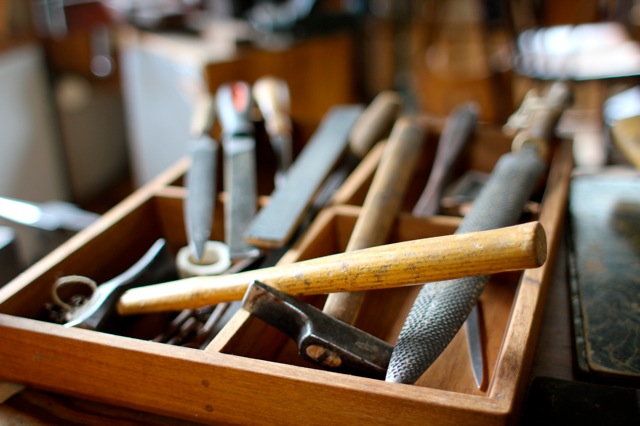
The tools! No CAD software here. Just a sketchbook and a bunch of well-worn tools to cut, carve, and shape metal and wood. It seemed like the workshop was mainly focused on metal work, although he could do light wood work as well. It wasn’t a full-on furniture making shop at all – it was very small. He would draw his pieces and have them prototyped outside. But it is clear he did a lot of creative work there.
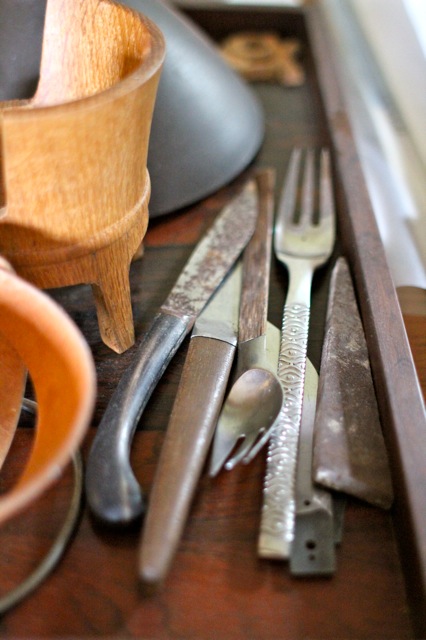
A bunch of finished and prototype pieces of flatware sit next to some small models of chairs.
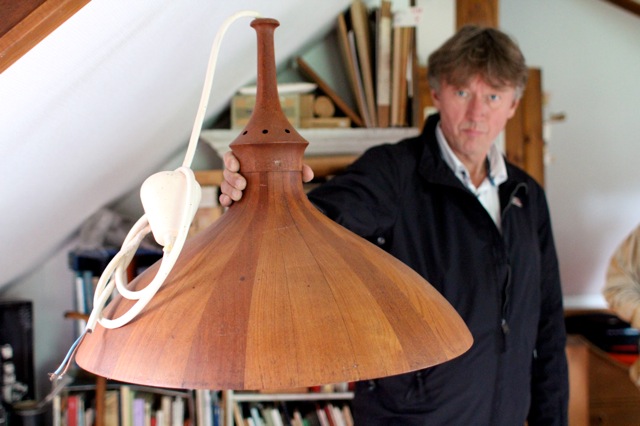
Here’s an amazing piece being modeled by Stig. It is a super rare staved teak light fixture that was hanging in one his homes at some point. The inside was lined with metal, and it was clear that a lot of hand-work had gone into it.
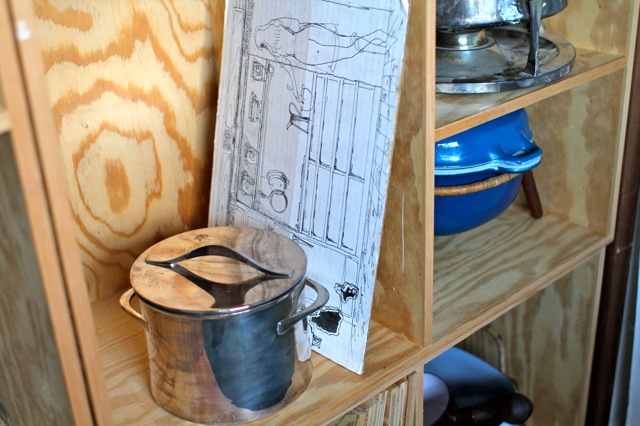
Next to the workshop is the archive. This is a small room with plywood shelving that is stacked to the ceiling with rare and common pieces mixed in with one-of-a-kind prototypes. It was a collector’s dream. There are reams of drawings, prototypes, correspondence, and books. I could have spent a lot more time there. Seen here are just a few of the treasures. That’s a (solid?) silver version of his early 60s line of copper cookware. Behind it is a hand-drawn rendering of his kitchen. I don’t know if he drew it as a still life of the kitchen or if it was drawn as a plan before its construction, but I do know that his cook was pretty good looking. There is more enamel, both early and late in the background. There was also rare pottery and a lot of unusual teak pieces that never went into production to be found up here, including some very strangely shaped bowls, a round knife rack filled with hand made knives, and unique ice buckets.
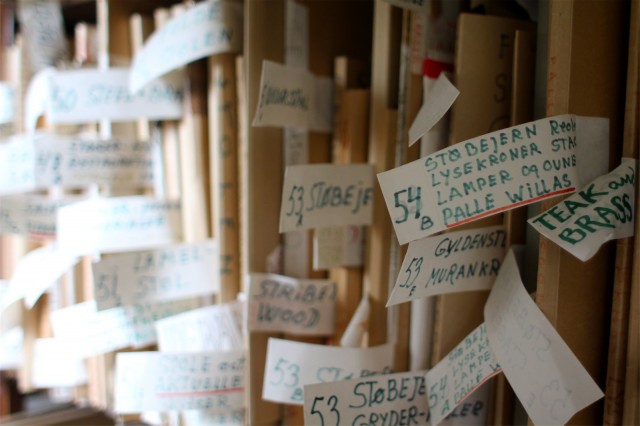
On the other side of the room are reams of drawings, prototypes, correspondence, and books. Shown here are just a few, carefully labelled in JHQ’s own hand. We opened a few and they were drawings and schematics of hundreds of different designs. One I remember seeing was a simpler version of Jette flatware, with just a few ripples on the handle. We looked through some other files and found rare articles he clipped early in his career as well as correspondence. He saved a lot – but I really didn’t get to go through the records. I’m sure there’s a trove of info there about all of his designs and hundreds of new ones that never saw the light of day. Next time I’m back I’ll save some time to go through these – at least to look for some cool pepper mill designs 😉
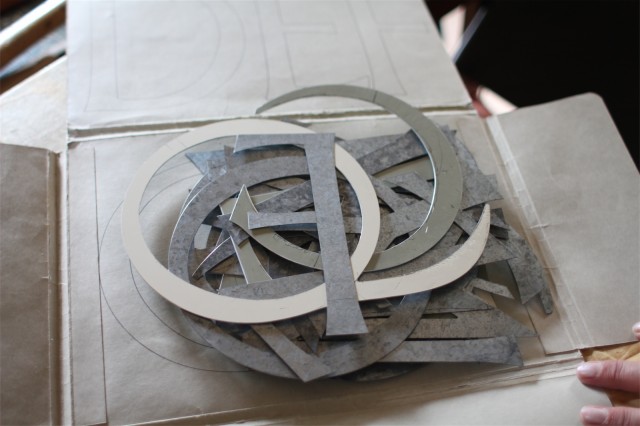 One interesting thing Henriette showed us were these hand cut letters. These would appeal to anyone who appreciates typefaces and handiwork. JHQ designed the lettering on the original Dansk logo, and it became his signature alphabet – you saw it on the sign on the outside of the garage. He made that sign from these metal letters that were cut and filed from sheet metal by JHQ himself. He did a lot of work like this with a piece of metal, a small metal-cutting saw, and a file and made these amazingly perfect works. They were remarkable to hold, and stand as a true testament to both JHQ’s mastery of numerous design disciplines and his amazing craftsmanship.


Sounds like a really cool place, really wish you would have included more pictures of what you were describing. It is one thing to read about it, but another to actually see them…